

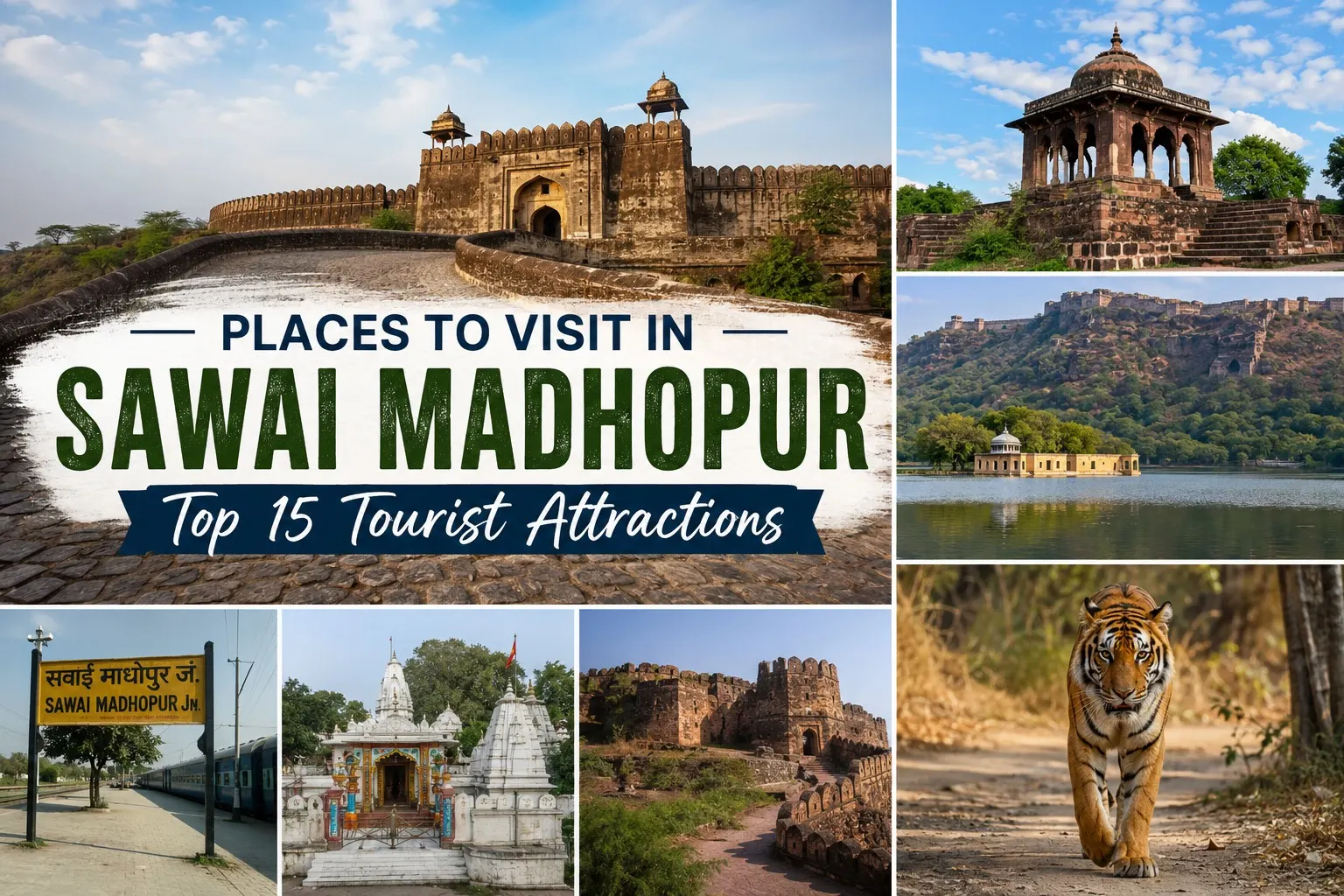
Places to Visit in Sawai Madhopur: Top 15 Tourist Attractions (2026 Travel Guide)
Tucked into the rugged hills of eastern Rajasthan, where the Aravalli and Vindhya ranges meet, Sawai Madhopur is best known as the gateway to Ranthambore National Park - one of India's most celebrated tiger reserves. But there's a lot more to this town than jeep tracks and pugmarks. Ancient forts, lakeside ruins, sacred temples, and living Rajasthani craft traditions all sit within easy reach of each other, making Sawai Madhopur one of the most complete short-break destinations in the state.
This guide covers everything you need to plan a trip: the best places to visit in Sawai Madhopur, the top tourist places in Sawai Madhopur for different kinds of travelers, nearby day-trip destinations, ready-made itineraries, and practical travel tips gathered from people who've actually done the safaris and walked the fort trails. Whether you have one day or three, you'll find a plan here that fits. Planning to travel by road? Our chauffeur-driven Force Urbania and Tempo Traveller rentals make the Delhi-Jaipur-Sawai Madhopur circuit comfortable for families and groups alike.
Why Visit Sawai Madhopur?
A Perfect Blend of Wildlife, History, and Culture
Few destinations in India pack in wildlife, heritage, and living culture as tightly as Sawai Madhopur does. In a single trip you can watch a tiger walk past a 1,000-year-old fort wall, offer prayers at a temple believed to be visited by newlyweds before every wedding invitation is sent out, and shop for hand-block-printed textiles made by local artisans. It's this layering of experiences - not just the tigers - that keeps travelers coming back.
Where is Sawai Madhopur Located?
Sawai Madhopur is a district town in eastern Rajasthan, roughly 180 km southeast of Jaipur and about 480 km from Delhi. It sits on the Delhi-Mumbai railway line, which makes it unusually easy to reach by train compared to many other wildlife destinations in India. Ranthambore National Park lies just 10-13 km from the town center and railway station.
When to Go: A Quick Snapshot
The park is open from October to June and closed for the monsoon between July and September, though buffer zones stay open through the rains. In short: winter is most comfortable, summer has the best sighting odds - see the full seasonal breakdown further down this guide for a month-by-month look.
How Many Days Are Enough to Explore?
Two full days is the sweet spot for most travelers, with three to four days better suited to serious wildlife photographers chasing multiple zones. See the day-by-day itineraries later in this guide for a full breakdown, or browse some best weekend getaways near Delhi if you're still deciding between trips.
Top 15 Places to Visit in Sawai Madhopur
This list of places to visit in Sawai Madhopur covers the destination's biggest draws, from the tiger reserve itself to quiet temples most tour groups skip.
1. Ranthambore National Park
Why visit: This is the reason most people come to Sawai Madhopur. Spread across roughly 1,334 sq km of dry deciduous forest, rocky outcrops, and lakes, Ranthambore is one of the best places in India - and the world - to see wild Bengal tigers in daylight.
Highlights: Free-roaming tigers that are famously unbothered by jeep traffic, along with leopards, sloth bears, marsh crocodiles, chital, sambar deer, and over 300 recorded bird species.
Safari zones: The park is divided into 10 zones. Zones 1-5 are "core" zones with the highest tiger density; Zones 6-10 are buffer zones that see fewer tourists but still offer good sightings. Zone allocation for jeep bookings is randomized by the forest department, so booking two or more safaris improves your odds of landing a core zone.
Entry timings: The park runs two safari shifts daily - a morning safari (roughly 6:00-9:30 AM) and an evening safari (roughly 2:30-6:30 PM) - with exact start and end times shifting through the year in line with sunrise and sunset. The park itself is open from 1 October to 30 June; during the July-September monsoon, only the buffer zones (6-10) operate.
Best photography spots: Padam Talao at sunrise for lotus-covered water and fort reflections, and the Rajbagh Ruins for atmospheric, half-submerged architecture.
Insider tips: Book directly through the official Rajasthan forest department safari portal rather than third-party resellers, and carry a valid photo ID - no exceptions are made at the gate. Gypsy (open jeep) safaris cost more than canter safaris but offer far better mobility and photography angles.
Good to know: Jeep safaris cost around ₹2,200 per seat for Indian nationals (roughly ₹4,200 for foreign nationals); canters run about ₹1,500-1,600 per seat (Indian) and ₹3,000 (foreign) - rates are revised periodically, so confirm current pricing on the official portal. Visit November-February for comfort, or April-June for the best sighting odds.
2. Ranthambore Fort
Rising nearly 700 feet above the forest, Ranthambore Fort predates the park around it by centuries. Its origins trace back to the 10th century, and it's recognized as part of the "Hill Forts of Rajasthan" UNESCO World Heritage Site - a group of six forts inscribed for their outstanding fortification and defensive architecture.
Historical significance: The fort changed hands between several Rajput dynasties, the Delhi Sultanate, and the Mughals over the centuries, and its ramparts, gates, and temple ruins reflect that layered history.
Best viewpoints: The fort walls near the main gate offer sweeping views over the park's lakes and forest canopy - many visitors combine a fort walk with their safari, since the fort sits inside the park boundary.
Good to know: Free entry, accessible via the safari route or by direct road. Best visited early morning, ideally October-March, when the climb and views are most pleasant.
3. Trinetra Ganesh Temple
Religious importance: Located inside Ranthambore Fort, this temple is dedicated to a three-eyed (Trinetra) form of Lord Ganesh and is one of the most revered Ganesh shrines in India.
Local beliefs: It's customary for people across Rajasthan to send their wedding invitations here first, addressed to the deity, before distributing them to guests - a tradition that draws a steady stream of visitors year-round, not just during safari season.
Best visiting hours: Early morning, both to beat the heat and to combine the visit with the fort walk before or after a safari.
Good to know: Free entry. Visit early morning for a quieter darshan, or time it around Ganesh Chaturthi for the temple's biggest festive gathering.
4. Padam Talao
The largest of the park's three main lakes, Padam Talao is famous for its lotus blooms and for framing some of the most iconic tiger photographs ever taken in Ranthambore, with the fort visible in the background. It also borders Jogi Mahal.
Good to know: No separate entry fee - covered under your safari ticket for Zones 1-3. Best seen on a winter sunrise safari, when the water is calm and the lotus blooms are at their peak.
5. Jogi Mahal
A former royal hunting lodge on the banks of Padam Talao, Jogi Mahal is one of the most photographed structures in the park. It's also known for standing beside one of the largest banyan trees in India.
Good to know: No separate charge - included in safaris covering Zone 2/3. Late-afternoon safaris catch the best light on the lake and the old banyan tree.
6. Malik Talao
A smaller, quieter lake often overlooked by first-time visitors, Malik Talao is a reliable spot for birdwatching and for catching crocodiles basking along the banks.
Good to know: No separate fee - accessible on Zone 3 safaris. Early morning winter safaris offer the most active birdlife and sunning crocodiles.
7. Rajbagh Ruins
Once a royal retreat, the Rajbagh Ruins are now partially submerged in the lake of the same name. The combination of crumbling arches, still water, and forest backdrop makes this one of the most atmospheric corners of the park, especially at sunrise.
Good to know: No additional cost beyond your Zone 1-3 safari ticket. Sunrise is best, when mist over the water makes the ruins especially photogenic.
8. Surwal Lake
Just outside the core forest area, Surwal Lake is a seasonal wetland that draws large numbers of migratory birds in winter, including flamingos, storks, and pelicans. It's a favorite with birders looking for a break from the tiger-safari crowds.
Good to know: Free entry - it sits outside the park's ticketed core area, so no safari permit is needed. Best visited November-February, when migratory bird numbers peak.
9. Kachida Valley
A rocky, scrub-covered valley on the park's outer edge, Kachida Valley is known for leopard sightings rather than tigers, along with sloth bears. It's less crowded than the core zones and worth a visit if you've already had a good tiger sighting elsewhere.
Good to know: Covered under the standard buffer-zone safari fee (roughly ₹1,500-2,200 per seat depending on vehicle and nationality). Early morning or dusk is best, when leopards and sloth bears are most active.
10. Rajiv Gandhi Regional Museum of Natural History
This museum offers context for everything you'll see on safari - exhibits on the region's geology, flora, and fauna, along with information on Project Tiger and Ranthambore's conservation history. It's a good low-key activity for a midday break between safaris.
Good to know: A nominal entry fee, typically ₹10-50 for Indian visitors (higher for foreign nationals and camera charges - check the current rate at the counter). Best visited midday, as a break between morning and evening safaris.
11. Chamatkar Temple
A Jain temple dedicated to Lord Adinath, Chamatkar Temple ("Chamatkar" meaning miracle) is known for a self-manifested idol that local tradition holds appeared on its own. It's a peaceful stop away from the main tourist circuit.
Good to know: Free entry. Morning hours are quietest; visit during Mahavir Jayanti to see the temple during a major Jain festival.
12. Amareshwar Mahadev Temple
A Shiva temple set in a scenic, forested location, popular with pilgrims and travelers looking for a quieter spiritual stop compared to the busier Trinetra Ganesh Temple.
Good to know: Free entry. Best visited early morning, or during Maha Shivratri for the temple's largest gathering of devotees.
13. Dastkar Ranthambore
A crafts center and women's cooperative working in traditional Rajasthani textiles, including hand-block printing and embroidery. Beyond shopping, it's a chance to see artisans at work and understand the craft traditions of the region - a good complement to the wildlife-focused parts of a trip.
Good to know: Free to browse and watch artisans at work - you only pay for what you buy. Weekday afternoons are quieter, giving artisans more time to talk about their craft.
14. Wild Dragon Adventure Park
A family-friendly amusement and adventure park near Sawai Madhopur offering rides, water activities, and outdoor games. It's a useful option if you're traveling with kids who need a break from safaris and temple visits.
Good to know: Works on an entry-plus-activity model - roughly ₹500-1,500 per person depending on how many rides you choose (zorbing, bungee running, bumper boats, etc.); confirm current packages directly with the park. Cooler months (October-March) suit outdoor play best, or aim for early morning/late afternoon slots if visiting in summer.
15. Shilpgram
An arts and crafts village showcasing Rajasthan's rural architecture, folk performances, and handicrafts in a recreated village setting. It's a relaxed half-day stop, particularly if you're interested in folk music and dance alongside shopping.
Good to know: A nominal entry fee, typically ₹20-50, with extra charges for specific cultural performances. Late afternoon into evening is best, when folk music and dance performances are most likely running.
Best Places in Sawai Madhopur to Visit for Every Type of Traveler
Not every traveler wants the same itinerary. Here's how to prioritize the best places in Sawai Madhopur to visit based on your interests.
For Wildlife Lovers: Ranthambore National Park (core zones 1-5), Padam Talao, and Kachida Valley for leopard sightings.
For Families: Wild Dragon Adventure Park, Shilpgram, and a gentler buffer-zone safari that's easier on younger kids than a long core-zone drive. If you're traveling as an extended family group from Delhi, a 9-seater Urbania rental for family trips keeps everyone together comfortably for the road journey.
For Couples: A sunrise safari followed by a quiet walk along Rajbagh Ruins, and dinner at a resort overlooking the forest.
For Nature Photographers: Padam Talao and Rajbagh Ruins at golden hour, plus Surwal Lake for bird photography during winter migration season.
For Spiritual Travelers: Trinetra Ganesh Temple, Chamatkar Temple, and Amareshwar Mahadev Temple.
For History Enthusiasts: Ranthambore Fort, Jogi Mahal, and the Rajiv Gandhi Regional Museum of Natural History for context on the region's past.
Things to Do in Sawai Madhopur
Beyond sightseeing, here are the experiences that make a trip here memorable - the real things to do in Sawai Madhopur.
Go on a Tiger Safari: The headline experience - see the Ranthambore National Park entry above for zones, timings, and pricing. Book both a morning and an evening safari if your schedule allows, since sighting chances vary with the time of day and season.
Experience Local Rajasthani Cuisine: Try dal baati churma, gatte ki sabzi, and ker sangri at local restaurants and resort dining rooms - most hotels near the park serve authentic Rajasthani thalis.
Shop for Local Handicrafts: Dastkar Ranthambore and Shilpgram are the best places to buy hand-block-printed textiles, pottery, and jewelry directly from artisans.
Visit Rural Villages Around Ranthambore: Several tour operators run village walks around the buffer zones, offering a look at rural Rajasthani life away from the tourist circuit.
Attend Local Festivals: If your visit lines up with regional festivals, temple fairs around Trinetra Ganesh Temple and seasonal Rajasthani cultural events are worth building your schedule around.
Things to Do in Ranthambore National Park
Once inside the reserve, here's how to make the most of your time - the essential things to do in Ranthambore National Park.
Jeep Safari: Open 6-seater gypsies offer the most flexibility and the best angles for photography. They're pricier than canters but worth it for serious wildlife watchers.
Canter Safari: Larger, covered 20-seat vehicles that are more budget-friendly and well suited to bigger groups or families, though with less maneuverability than jeeps.
Responsible Wildlife Tourism Guidelines: A few practices help protect the park and improve your own experience:
- Keep mobile phones on silent inside the core zones and avoid loud conversation.
- Stay seated inside the vehicle at all times and never ask your driver to approach an animal closely.
- Book only through official channels or authorized operators to avoid overcharging and unregistered vehicles.
- Carry your original government ID - photocopies are not accepted at the gate.
Morning vs. evening safari: Morning safaris tend to be better for birdwatching and cooler, more comfortable drives; evening safaris often see more predator activity as temperatures drop. If you can only take one, ask your hotel or operator which shift has had stronger recent sightings in your assigned zone.
Places to Visit Near Sawai Madhopur
If you have extra time, several worthwhile destinations lie within a few hours' drive - the best places to visit near Sawai Madhopur for a day trip or short extension.
- Khandar Fort - roughly 45-50 km away, a lesser-visited hilltop fort with dramatic, crumbling architecture and far fewer crowds than Ranthambore Fort.
- Chauth Mata Temple - around 25 km from town, an important pilgrimage site perched on a hill, especially busy during Chauth Mata fair.
- Ramgarh Vishdhari Tiger Reserve - about 45 km away, one of Rajasthan's newer tiger reserves, worth considering as a quieter alternative or add-on safari destination.
- Karauli - roughly 90 km away, known for its painted havelis, palaces, and the Kaila Devi Temple.
- Bundi - around 130 km away, famous for its stepwells, murals, and the atmospheric Taragarh Fort.
- Jaipur - about 180 km away, Rajasthan's capital and a natural extension for travelers combining Ranthambore with a broader Rajasthan circuit. While there, it's worth seeking out some hidden temples near Jaipur that most first-time visitors miss.
- Chambal River Safari - roughly 130-150 km away, offering boat safaris to spot gharials, marsh crocodiles, and river dolphins - a very different wildlife experience from the forest safaris of Ranthambore.
One-Day and Two-Day Itinerary for Sawai Madhopur
How you structure your visit depends heavily on safari timings, which shift with sunrise and sunset - so treat the clock times below as a guide and adjust once you know your actual slot for the day.
1-Day Itinerary
Best suited to travelers passing through on a tight schedule, or those extending a Jaipur trip by a single day.
- 6:00 AM - 9:30 AM: Morning tiger safari in a core zone (Zone 1-5, if allotted). Arrive at the gate at least 30 minutes before your slot for ID verification and vehicle allocation.
- 10:00 AM - 12:00 PM: Head to Ranthambore Fort and Trinetra Ganesh Temple inside the fort complex, and take in the views over Padam Talao from the ramparts.
- 12:30 PM - 2:00 PM: Lunch back in town - try a local Rajasthani thali featuring dal baati churma or gatte ki sabzi.
- 2:00 PM - 3:30 PM: Stop at Dastkar Ranthambore to see artisans at work and shop for hand-block-printed textiles.
- 2:30 PM - 6:30 PM (approx.): Evening safari, ideally in a different zone from the morning to maximize sighting variety.
- Evening: Dinner and an early night if you're catching a morning train onward - Sawai Madhopur Junction has frequent connections in most directions.
Practical note: Fitting two safaris into one day means booking both slots in advance, since same-day availability is limited and often sold out for popular zones. If you can only manage one safari, prioritize the morning slot for cooler temperatures and better light for photography.
2-Day Itinerary
The most common choice for travelers who want a proper mix of wildlife, heritage, and culture without rushing.
Day 1
- 6:00 AM - 9:30 AM: Morning safari (Zone 1-5 preferred).
- 10:00 AM - 1:00 PM: Rest at your hotel or resort, since midday heat (especially March-June) makes outdoor sightseeing uncomfortable. Use this window for the Rajiv Gandhi Regional Museum of Natural History.
- 1:00 PM - 2:00 PM: Lunch.
- 2:30 PM - 6:30 PM (approx.): Evening safari in a zone different from the morning's.
- Evening: Dinner at your resort; most properties near the park serve Rajasthani cuisine and can arrange a bonfire or cultural evening on request.
Day 2
- 6:00 AM - 9:30 AM: Morning safari, ideally a buffer zone (6-10) if you covered core zones on Day 1, or vice versa.
- 10:00 AM - 12:30 PM: Ranthambore Fort and Trinetra Ganesh Temple.
- 1:00 PM - 2:00 PM: Lunch in town.
- 2:00 PM - 5:00 PM: Shilpgram or Wild Dragon Adventure Park, depending on whether you're traveling with kids or prefer folk culture and handicrafts.
- Evening: A final Rajasthani dinner before departure, or an early start the next morning if you're continuing on to Jaipur or another Rajasthan destination.
Practical note: Book both days' safaris together when possible - the online portal allows advance booking up to 90 days ahead, and doing this in one sitting avoids losing a preferred time slot between visits.
3-Day Wildlife Itinerary
Designed for serious wildlife photographers or travelers who want to maximize both sighting odds and zone variety.
- Day 1: Two safaris (morning and evening), both focused on core zones (1-5), to give yourself the strongest possible chance at tiger sightings early in the trip.
- Day 2: A buffer-zone safari (6-10) for a quieter, less crowded experience, followed by a visit to Kachida Valley in the late afternoon for leopard and sloth bear spotting. Round out the day with an early-evening stop at Surwal Lake for birdwatching, especially rewarding between November and February.
- Day 3: A relaxed morning covering Ranthambore Fort, Chamatkar Temple, and Amareshwar Mahadev Temple - all light on walking and easy to fit in before checkout. In the afternoon, take a day trip to Khandar Fort (around 45-50 km) or Ramgarh Vishdhari Tiger Reserve (about 45 km) for a change of scenery before heading out.
Practical note: With four to six safaris across three days, book a mix of jeep and canter safaris to manage cost - jeeps for the days you most want flexibility and closer sightings, canters for days where budget matters more.
Sawai Madhopur Places at a Glance
| Place | Best For | Good to Know |
|---|---|---|
| Ranthambore National Park | Tiger safaris | Jeep approx ₹2,200/seat; canter approx ₹1,500-1,600/seat |
| Ranthambore Fort | History & views | Free entry, inside the park boundary |
| Trinetra Ganesh Temple | Spiritual visit | Free entry, inside the fort |
| Padam Talao | Photography | Covered under Zone 1-3 safari ticket |
| Jogi Mahal | Heritage architecture | No separate charge, Zone 2/3 safaris |
| Rajbagh Ruins | Sunrise photography | Included in Zone 1-3 safari ticket |
| Surwal Lake | Birdwatching | Free entry, no safari permit needed |
| Dastkar Ranthambore | Handicraft shopping | Free to browse, pay only for purchases |
How to Reach Sawai Madhopur
By Air
The nearest airports are Jaipur (about 180 km) and Kota (around 110 km); Jaipur has significantly more domestic and international connections.
By Train
Sawai Madhopur Junction sits directly on the Delhi-Mumbai main line and is well connected to Delhi, Jaipur, Mumbai, and Kota, making the train the most convenient way to reach the town. The station is just 10-13 km from the park entrance.
By Road
Sawai Madhopur is connected by national highways to Jaipur (roughly 3.5-4 hours by car), Delhi (around 7-8 hours), and Kota (about 2-2.5 hours), making it a comfortable stop on a broader Rajasthan road trip. If you're driving in from Jaipur, this Jaipur to Ranthambore distance and travel guide breaks down the route in detail, and travelers combining this with the Golden Triangle may also find this Delhi to Agra distance and travel guide useful for planning the full circuit.
Local Transportation Options
Auto-rickshaws and taxis are readily available at the railway station and around the town for short hops to hotels and the park gate. Most resorts near Ranthambore also arrange pick-up and safari transport for guests, which is generally the simplest option for visitors unfamiliar with the area.
For groups traveling together from Delhi or Jaipur, a self-driven itinerary often works out more comfortable than stringing together taxis - a 12-seater Tempo Traveller rental suits small tour groups and extended families well, and if you're unsure which vehicle fits your group size, this Urbania vs Tempo Traveller comparison is a useful starting point. Travelers planning to combine Sawai Madhopur with other stops can also look at these outstation Urbania van hire packages from Delhi for a ready-made vehicle option covering the whole trip.
Best Time to Visit Sawai Madhopur
Winter Season: October to February brings cool, pleasant weather with daytime temperatures generally in the 15-25°C range. It's the most comfortable season for long safaris and fort walks, though early mornings can be cold enough to need a jacket.
Summer Safari Experience: March to June is hot, with temperatures climbing well above 40°C by May. Despite the heat, this is peak tiger-sighting season, since animals gather near the park's lakes and waterholes to cool off.
Monsoon Travel: July to September brings rain, lush greenery, and a much quieter park - core zones 1-5 close, but buffer zones 6-10 remain open, offering a scenic, less crowded alternative for travelers who don't mind trading tiger odds for solitude and dramatic monsoon landscapes.
Monthly Weather Guide: Roughly speaking: December-January are the coolest months (good for comfort, moderate for sightings); April-May are the hottest (best sightings, toughest conditions); July-September is wet and humid with limited safari zones; October-November and February-March offer a good balance of comfort and sightings.
Travel Tips for Visiting Sawai Madhopur
- Safari booking advice: Book online well in advance through the official forest department portal, especially for winter weekends and holiday periods.
- Clothing recommendations: Wear muted, neutral colors on safari (khaki, olive, beige) rather than bright clothing, and carry a light jacket or shawl for early morning winter drives.
- Photography tips: A zoom lens of 300mm or more is ideal; keep your camera settings ready before entering the park, since sightings can be brief.
- Safety guidelines: Stay inside the vehicle at all times, follow your guide's instructions, and never encourage the driver to get unnecessarily close to wildlife.
- Local customs: Dress modestly when visiting temples, and remove footwear before entering temple premises.
- Mobile network availability: Coverage is generally reliable in the town and at most resorts, but can be patchy inside the park itself.
- Cash vs. digital payments: UPI and card payments are widely accepted in town and at hotels, but it's worth carrying some cash for smaller shops, local markets, and rural areas.
- Responsible tourism practices: Avoid single-use plastic inside the park, don't litter, and support local guides and artisan cooperatives like Dastkar Ranthambore where you can.
Booking Tips:
Why Choose Luxury Urbania Hire Rental Delhi?
A wildlife-and-heritage trip should be relaxing from the moment you leave home until you return, and comfortable transportation plays an important role in that experience. At Luxury Urbania Hire Rental Delhi, we provide premium chauffeur-driven Force Urbania and Tempo Traveller services designed for families, tour groups, corporate travellers, and tourists exploring Rajasthan.
Our vehicles are regularly maintained, fully air-conditioned, and equipped with comfortable seating to ensure a relaxing journey. Our experienced drivers are familiar with the routes to Sawai Madhopur and Ranthambore, allowing you to focus on your safaris and sightseeing while we take care of the travel. Whether you need a one-day trip or a customised multi-day itinerary covering Jaipur and Sawai Madhopur together, we are committed to providing a safe, reliable, and hassle-free travel experience.
Final Thoughts
Sawai Madhopur is one of the rare destinations that genuinely delivers on every front - wildlife, history, spirituality, and nature all within a compact, easy-to-navigate area. A well-planned trip here doesn't have to choose between a tiger safari and a fort walk, or between a temple visit and an afternoon of birdwatching; there's room for all of it, even in a short two-day visit. Use the itineraries and tips in this guide as a starting point, book your safaris early, and you'll come away with a trip that covers far more ground than most travelers expect from a single Rajasthan destination.
Note: Safari timings, zone availability, and entry fees are set by the Rajasthan forest department and can change seasonally. Always verify current details on the official Ranthambore safari booking portal before you travel.